
New ecological project

 02 December, 2025 11:12
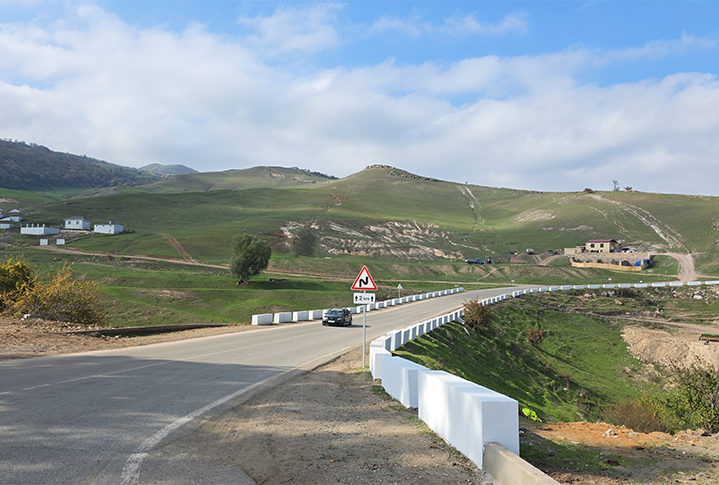
Some time ago, Baku Maintenance Service began carrying out the important and honorable task of renovating Lachin. In addition to projects such as the repair and restoration of homes, city reconstruction and lighting, road improvement, infrastructure development, and the establishment of new businesses and jobs for residents, the company also addressed essential areas such as city cleanliness and landscaping. At that time, the production of compost along the Hekeri River in Lachin was among the initiatives being implemented. Two pieces of equipment of different capacities were installed to convert household waste into organic fertilizer compost.
To operate the industrial composters, spoiled fruits, rotten vegetable residues, straw, and other waste materials were placed into the equipment. The waste was shredded in the apparatus, and the compost production process began. Since the process was completed within a day, the finished product was ready the following day.
The advantage of compost over other fertilizers was that it was completely natural and highly effective. The use of such equipment in Lachin contributed not only to cleanliness and the proper utilization of waste but also to the development of different cultural habits among residents and visitors. With the implementation of these innovations and the collective effort of the people of Lachin, the city could become one of the cleanest in the region.
This initiative, which began in Lachin two years ago, has now started to be widely implemented in Baku. The aim is to strengthen ecological awareness and ensure the efficient use of natural resources.
During the project carried out by Baku Maintenance Service in cooperation with the “EcoSfera” Ecological-Social Center, food and organic waste recycling will be conducted in schools.
Within the framework of collaboration between Baku Maintenance Service and the “EcoSfera” Ecological-Social Center Public Association, a new phase of food and organic waste recycling has begun in general education institutions across Azerbaijan, aiming to strengthen ecological awareness and promote the efficient use of natural resources. As part of the partnership, the distribution of 100 biohumus devices to nearly 100 participating schools has been launched.
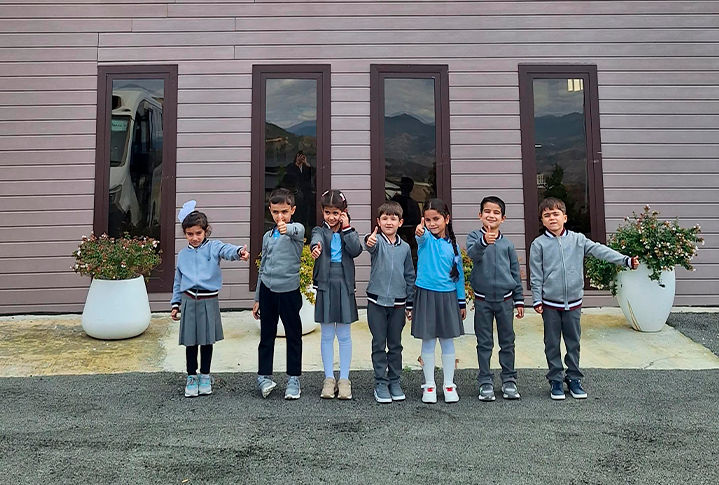
The first event of the project took place in Balakhani. Children who were invited received detailed information about compost and how it works. Participants were able to see the equipment in action. Schoolchildren, taking part in an interactive game, produced fertilizer with their own hands. It is worth noting that organic waste management is a priority project worldwide that involves young people. The launch of this initiative in Azerbaijan is a clear example of the country’s integration into the global green movement.
The natural fertilizer biohumus produced from the recycling of food and organic waste will be used for landscaping school grounds. If the process continues regularly, school landscapes will be fully supplied with ecological fertilizer. The most notable aspect of the project is its inclusivity, meaning that every student at the school can participate. This provides practical ecological experience for teenagers and creates a learning environment where the process can be applied in schools. It is planned that after the project period ends, the equipment will be collected and returned to EcoSfera.
This initiative is considered the largest practical project in the country aimed at fostering ecological behavior and a culture of resource circulation among schoolchildren.


 01.07.2024